The Follow-Up Gap: Where 80% of Freight Leads Die
Most freight brokers pay to generate leads, then drop 80% of them after one or two touches. The lead never says no. It just goes silent. Here is what that gap is costing you.
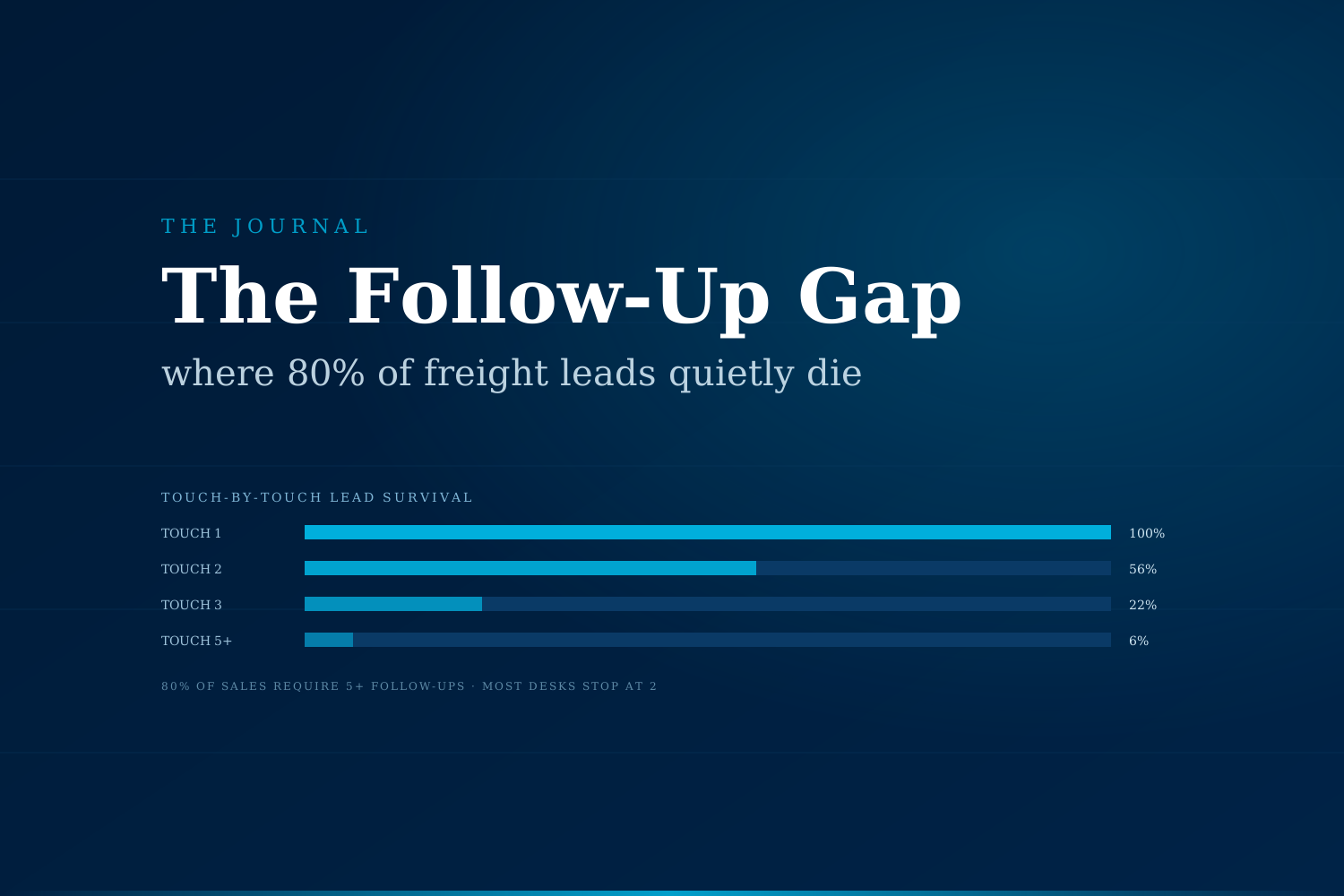
Most freight brokers spend a small fortune generating inbound leads (Google Ads, load boards, LinkedIn outreach, referrals) and then drop 80% of them after one or two emails. The lead never says no. It just goes silent. Here is what that gap is costing you, and what a sales desk that closes it actually looks like.
What is "the follow-up gap" in freight sales?
The follow-up gap is the distance between the last touch a rep puts on a lead and the touch that lead actually needed before it would book. The gap is almost always wider than reps realize.
Industry surveys consistently report two numbers that, together, explain why so many freight desks underperform their lead spend:
- Around 44% of B2B salespeople give up after one follow-up. Most desks stop at touch two.
- Roughly 80% of B2B sales require five or more follow-up touches after the first conversation to close.
Stack those together and the math is brutal. Most leads die in the gap between when reps stop and when buyers actually decide.
Why does the gap exist on every freight desk?
It is not laziness. It is structural.
Reps prioritize the loud and the easy. The shipper who replied with a question gets answered. The shipper who said "let me check with my team" gets a polite reminder on Friday and then disappears from the rep's mental queue. Without an external system tracking who needs which touch on which day, the lead falls to whoever the rep happens to be thinking about.
A second reason: most CRMs are built for pipeline reporting, not follow-up execution. They tell you how many leads are in stage two. They do not nudge a rep at 9:14 AM that lead #2,148 is exactly seven days past last touch and historically converts on touch four.
Third reason: reps are also doing carrier sourcing, quoting, dispatch coordination, and exception-handling. Follow-up is the work that loses every time something else is on fire.
What does the follow-up gap actually cost?
Take a desk generating 800 inbound RFQs a month across paid channels and inbound, typical for a mid-size brokerage.
Assume a fully loaded cost per lead of $80 (paid ads, list rentals, content, SDR salary spread). That is $64,000 a month in lead spend, or roughly $768,000 a year.
Now apply the industry numbers. If 44% of those leads get one or no follow-ups, that is around 350 leads a month, or about $28,000 of lead spend every single month that is effectively wasted because the rep never made it to touch three. Annualized, that is $336,000 of lead spend funding leads no one ever closed.
That number does not include:
- The margin on the loads those leads would have booked.
- The lifetime value of customers who would have stuck for years.
- The competitor who got the booking because they showed up at touch four.
For most freight desks, the recoverable revenue inside the follow-up gap is two to three times the lead spend itself.
What changes when AI runs the follow-up layer?
Same desk. Different outcome.
| Layer | Manual desk | AI-augmented desk |
|---|---|---|
| Touch cadence | Inconsistent (1 to 2 attempts) | Sequenced 6–10 touches across email, LinkedIn, voicemail prompts |
| Personalization | Generic template, sometimes | Tailored per lead: lane, equipment, prior conversations, public news |
| Timing | Whenever the rep remembers | Scored: leads surfaced at the moment they are statistically most reachable |
| Reply triage | Rep reads everything | Replies routed; only the ones that need a human reach the rep |
| What dies | Most leads, silently | Only leads who explicitly opt out |
| Rep's role | Chasing | Closing |
The point is not that "AI sends emails." The point is that no lead exits the desk without being properly worked, and the rep's calendar is filled with the conversations that actually convert.
What does a closed-gap desk look like in practice?
A few things shift visibly within the first 60 days.
Pipeline shape changes. The "stalled" stage shrinks because leads are either progressing or formally disqualified. There is no third bucket of "we'll get back to them" sitting in someone's inbox.
Reps stop dreading inbound volume. Today, more leads is more guilt. After the gap closes, more leads is more revenue, because the marginal lead actually gets touched.
Conversion rate stops looking like rep quality. It starts looking like a system. Best reps still close better than average reps, but the floor rises sharply. Average reps stop losing the ones the system already warmed up.
Lead-to-close cycle compresses. Buyers who used to ghost for months because no one followed up now formally say no, or yes, within the first 30 days. Cash flows faster.
Three signs worth checking on your own desk
A quick internal audit usually surfaces at least one of these. None are unusual; most freight desks live with at least one without realizing what it costs.
- You cannot say, off the top of your head, what touch number your reps reach on average before a lead either books or goes silent.
- The top rep's "secret" is a notebook of leads they're tracking outside the CRM.
- A scan of 6-month-old "lost" leads turns up more single-touch records than you'd expect.
If any of these feel familiar, the gap on your desk is likely wider than it looks, and likely wider than the competitors who have already closed theirs.
The honest tradeoff: humans still close
AI does not negotiate, build trust, or save a deal that is going sideways at minute 14 of the first call. Humans do that. The leverage is that humans should be on calls one through four, not in Outlook copying templates into 18 different threads.
The desks that win the next two years in freight sales will not be the ones with the most reps. They will be the ones whose reps spend their day on conversations that already have warmth, because something else made sure those conversations happened in the first place.
If any of this rings true on your desk, we offer a completely free automation audit for freight and logistics sales teams. We map your current touch coverage, identify where leads are going silent, and quantify the recoverable revenue, which is typically between two and four times current monthly lead spend. No slide deck, no commitment, just a clear, honest picture.